

.jpg)
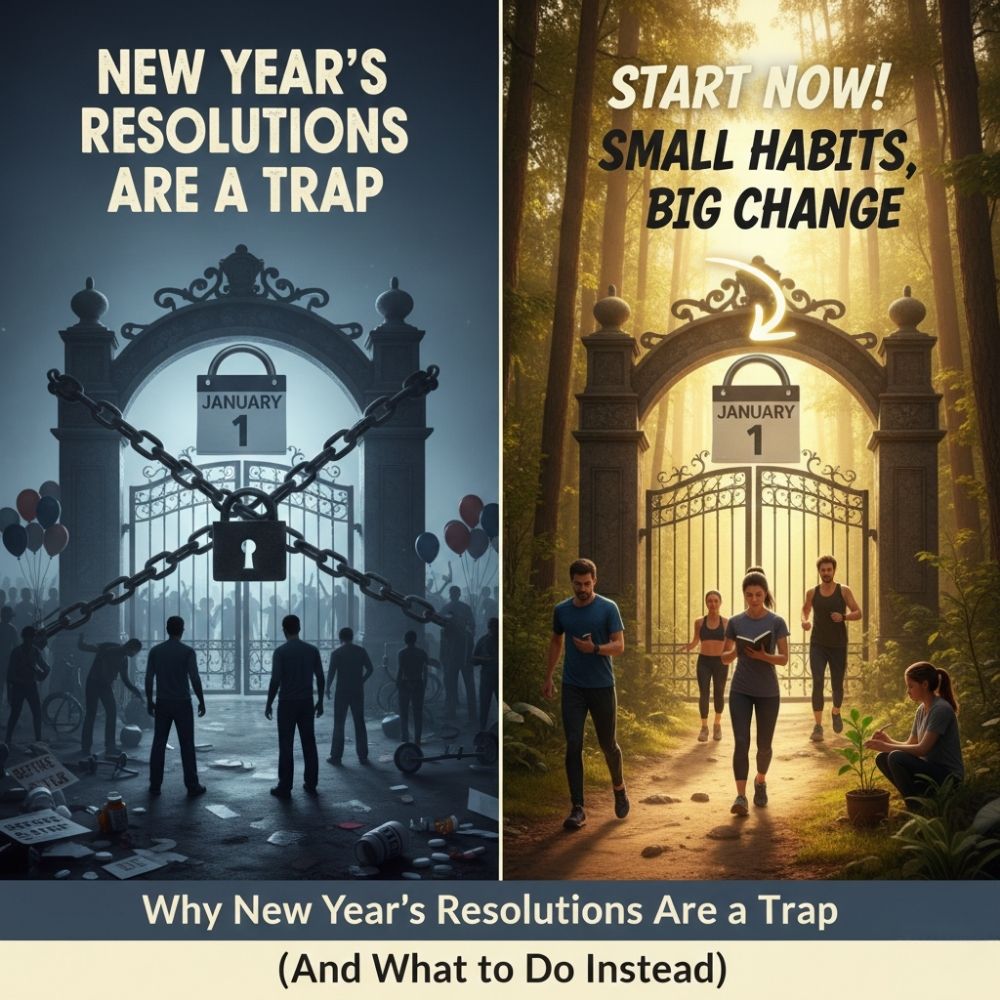
Why New Year's Resolutions Are a Trap (And What to Do Instead)
Every year, as the calendar flips to January, millions of us declare our intentions to build a "new me." We resolve to lose weight, get organized, and finally chase our dreams. Yet, studies consistently show that the vast majority of these resolutions are abandoned within weeks. The packed gyms of January become deserted by February. The problem isn't our desire for self-improvement; it's the very concept of the New Year's resolution itself. It’s a tradition built on a flawed premise: that change requires a special, arbitrary date on the calendar to begin.
The truth is, January 1st is just another day. It’s a date we use to signify the Earth's revolution around the sun, a necessary marker for business and administrative tasks. However, it holds no magical power for personal transformation. Relying on this date creates a dangerous mindset. It encourages procrastination ("I'll start on Monday... or next year") and promotes an all-or-nothing approach. We often see people indulge excessively on New Year's Eve, as if to purge bad habits before a permanent, miraculous change at midnight. This cycle of binging and restricting is unsustainable and sets us up for failure.
Instead of waiting for permission from the calendar, the most powerful time to make a change is the moment you feel motivated to do so. Why wait? That hesitation is often rooted in a fear of the unknown or the discomfort that comes with breaking old patterns. The secret to lasting change isn't a grand, one-time declaration, but a commitment to small, consistent actions. If you want to be healthier, don't wait for the New Year; take a 10-minute walk today. If you want to learn a new skill, spend 15 minutes practicing right now. Starting before the New Year even gives you a head start on everyone else.
To make your goals stick, they need structure. Forget vague resolutions and adopt the SMART framework: make your goals Specific, Measurable, Achievable, Relevant, and Time-bound. Rather than "eat healthier," aim to "add one serving of vegetables to my dinner every day for a week." This approach, as detailed in James Clear's "Atomic Habits," focuses on building tiny, incremental habits that compound over time. Improving by just 1% each day makes you over 37 times better in a year. This method is less overwhelming and builds momentum, making you more likely to succeed.
This year, let go of the pressure of the New Year's resolution. Your journey of self-improvement doesn't need a specific start date. It starts the moment you decide to act. Focus on competing only with the person you were yesterday. Write down your goals, share them with someone you trust for accountability, and celebrate the small wins along the way. True transformation begins not on January 1st, but with the next small choice you make. Your change starts NOW!